
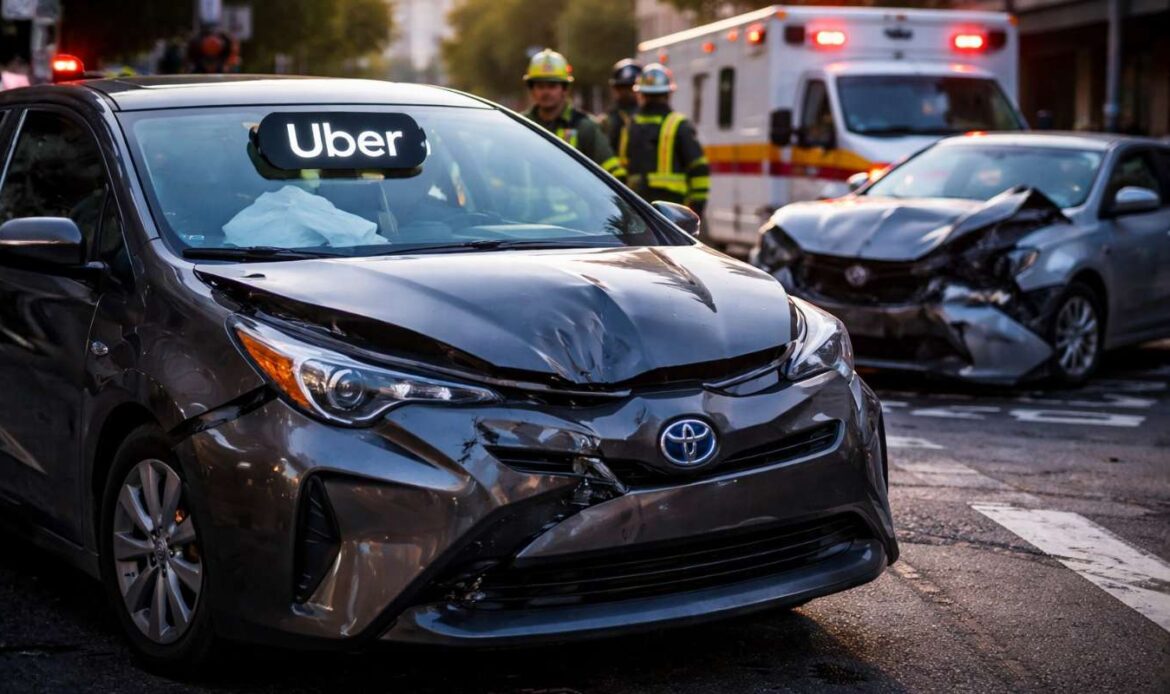
Ride-sharing services like Uber and Lyft have transformed the way people travel across Connecticut, offering convenient and affordable transportation in cities and suburbs alike. However, as the popularity of these services has grown, so has the number of accidents involving rideshare vehicles on Connecticut roads. When a rideshare accident occurs, the legal and insurance challenges that follow are often far more complicated than those associated with a traditional accidente automovilístico.
Passengers, drivers, pedestrians, and other motorists may all be affected by a rideshare collision, and determining who is responsible for covering injuries and damages is rarely straightforward. Multiple insurance policies, shifting coverage phases, and questions about independent contractor status create a web of complexity that can leave accident victims confused and vulnerable. Understanding how rideshare accident claims work in Connecticut and knowing what steps to take after an accident are essential for protecting your rights and pursuing fair compensation. At L.A. LAW, our rideshare accident attorneys have the experience and knowledge to walk you through every stage of the claims process.
Why Rideshare Accidents Are More Complicated Than Regular Car Accidents
A standard car accident typically involves two drivers and their respective insurance companies. Rideshare accidents, on the other hand, often involve multiple parties: the rideshare driver, the rideshare company itself, other drivers on the road, and potentially several different insurance carriers. Each of these parties may share some degree of responsibility, and each has its own interests in minimizing financial exposure.
One of the biggest complicating factors is that rideshare drivers are typically classified as independent contractors rather than employees of Uber or Lyft. This classification directly affects how liability is determined because the rideshare company may argue that it bears limited responsibility for its drivers’ actions. In addition, the insurance coverage that applies to a rideshare accident depends entirely on the driver’s status within the app at the time of the collision. Whether the driver was logged off, waiting for a request, or actively transporting a passenger determines which insurance policy covers the damages, and figuring that out without legal guidance can be extremely difficult.
Understanding RideShare Insurance Coverage in Connecticut
In Connecticut, rideshare drivers are required to carry personal auto insurance, while rideshare companies like Uber and Lyft provide additional commercial coverage that activates depending on the driver’s status at the time of an accident. This layered coverage system means the insurance available to accident victims varies based on what the driver was doing at the time of the crash. Understanding these coverage phases is critical when pursuing a rideshare accident claim, because the amount of insurance available can vary dramatically from one phase to the next.
When the App Is Off
When a rideshare driver is not logged into the Uber or Lyft platform, they are treated like any other private driver on the road. In this situation, the driver’s personal auto insurance policy typically covers any damages or injuries resulting from an accident. The rideshare company’s commercial insurance generally does not apply when the app is off, which means victims must pursue compensation through the driver’s personal coverage. This phase can pose challenges if the driver’s personal policy has low liability limits or coverage gaps.
When the Driver Is Logged In but Has No Passenger
This phase occurs when a driver has logged into the rideshare app and is waiting for a ride request, but has not yet accepted one. During this period, rideshare services typically provide contingent liability coverage that supplements the driver’s personal insurance. Coverage limits during this phase are generally lower than those available during active rides, typically around $50,000 per person for bodily injury, $100,000 per accident, and $25,000 for property damage. This coverage usually acts as secondary insurance, meaning it only kicks in if the driver’s personal policy does not fully cover the damages. Determining responsibility during this stage can be more complex because the driver was technically available for work but was not yet engaged in a specific trip.
When the Driver Is Picking Up or Transporting a Passenger
This phase begins the moment a driver accepts a ride request and continues until the passenger is dropped off at their destination. During active rides, rideshare companies provide the highest level of insurance coverage, typically up to $1 million in liability protection. This coverage applies to injuries and property damage sustained by passengers, pedestrians, cyclists, and other drivers, depending on the circumstances of the accident.
Coverage typically available during active rides includes:
- Up to $1 million in liability coverage for bodily injury and property damage caused by the rideshare driver during an active trip.
- Uninsured motorist coverage that may apply if the at-fault driver does not carry adequate insurance.
- Underinsured motorist coverage that can supplement compensation when the responsible party’s policy limits are insufficient to cover the full extent of damages.
- Coverage for passengers, pedestrians, cyclists, and occupants of other vehicles, depending on the circumstances of the collision.
Connecticut Laws That Affect RideShare Accident Claims
Connecticut regulates transportation network companies (TNCs) such as Uber and Lyft through specific state laws that govern how these services operate. Rideshare drivers must meet certain licensing and insurance requirements to operate legally in the state, and companies are required to maintain minimum levels of coverage for each phase of driver activity. Connecticut follows a fault-based insurance system, which means the person responsible for causing the accident is also responsible for covering the resulting damages and injuries.
Connecticut’s comparative negligence laws also play a significant role in rideshare accident claims. Under these laws, if the injured person is found to be partially at fault for the accident, their compensation may be reduced by their percentage of responsibility. If the injured party is found to be more than 50 percent at fault, they may be barred from recovering any compensation at all. The state also imposes a statute of limitations on filing personal injury claims, making timely legal action essential. These local laws and insurance requirements directly influence the claims process, which is why working with a rideshare accident attorney in Connecticut who understands these nuances is so important. For a broader understanding of how Connecticut injury law applies to your situation, visit our Áreas de práctica de lesiones personales en Connecticut page.
Steps to Take After a Rideshare Accident
The actions you take immediately following a rideshare accident can significantly impact the strength of your claim and your ability to recover compensation. Here are the five most important steps to follow.
1. Seek Medical Attention Immediately
Getting medical treatment as soon as possible after a rideshare accident is critical, even if your injuries appear minor at first. Some injuries, including concussions, whiplash, and internal bleeding, may not show symptoms for hours or even days after the collision. Prompt medical evaluation ensures your injuries are documented from the start, and those medical records serve as essential evidence in your injury claim. Follow all medical advice and complete every recommended treatment, because gaps in care can be used by insurance companies to argue that your injuries are not as serious as you claim.
2. Report the Accident
Call law enforcement and ensure that a police report is created for the accident. Official documentation from responding officers helps establish the facts surrounding the collision and can be invaluable during the claims process. If you were a passenger during the ride, report the accident through the Uber or Lyft app as well, since this creates a digital record of the incident. Notify your own insurance company about the accident, but be careful to avoid making statements that could be interpreted as admitting fault or minimizing your injuries.
3. Gather Evidence
Collecting information at the scene is one of the most important things you can do to strengthen your claim, as long as it is safe to do so. The same evidence-gathering principles that apply to car accident claims are equally important in rideshare cases. Strong documentation helps establish liability and supports the full value of your damages.
Types of evidence that can strengthen a rideshare accident claim:
- Photos of vehicle damage, visible injuries, road conditions, and the overall accident scene taken from multiple angles.
- Contact information from all drivers, passengers, and witnesses present at the scene.
- Rideshare trip details and screenshots from the Uber or Lyft app, including driver information, route, and ride confirmation.
4. Speak with a Rideshare Accident Lawyer
Consulting an attorney experienced with rideshare accident claims is one of the most important steps you can take after an incident. A rideshare accident lawyer can help determine which insurance policies apply to your situation, gather additional evidence, negotiate with insurers, and build a strong case on your behalf. Early legal guidance can also prevent costly mistakes, such as accepting a lowball settlement offer or inadvertently providing information that weakens your claim. The sooner you speak with an attorney, the better positioned you will be to protect your rights.
5. Avoid Talking with Insurance Adjusters Without Legal Advice
Insurance companies may contact you quickly after a rideshare accident, and their adjusters are trained to settle claims for as little as possible. They may use friendly conversation to get you to make statements that minimize your injuries or shift blame onto you. Avoid giving recorded statements or signing any documents without first having them reviewed by your attorney. A rideshare accident attorney can communicate with insurance companies on your behalf, ensuring that your interests are protected and that you do not inadvertently undermine your claim.
Why Legal Representation Matters in Rideshare Accident Claims
Rideshare accident claims often involve multiple insurance policies, layered coverage structures, and complex liability questions that require experienced legal analysis to navigate effectively. An Uber accident lawyer in Connecticut who understands how these cases work can help identify all possible sources of compensation and pursue every avenue available to maximize your recovery. At L.A. LAW, we have a proven track record of fighting for accident victims, and you can review our proven case results to see the outcomes we have achieved for our clients.
Damages that may be recoverable in rideshare accident cases include:
- Medical expenses, including emergency treatment, surgery, hospitalization, rehabilitation, and ongoing care.
- Lost wages and reduced earning capacity resulting from injuries that prevent you from working.
- Pain and suffering compensation for the physical discomfort and emotional distress caused by the accident.
- Property damage to your vehicle or personal belongings.
An experienced attorney can negotiate aggressively with insurance companies and pursue litigation if a fair settlement cannot be reached. Legal representation can significantly improve your chances of obtaining the compensation you need to cover your medical expenses, replace lost income, and address the full impact of the accident on your life.
Need a Rideshare Accident Lawyer? L.A. LAW Can Help Protect Your Rights
Rideshare accident claims are among the most legally complex personal injury cases in Connecticut, and attempting to navigate the process alone puts you at a significant disadvantage against well-funded insurance companies. Understanding the phases of insurance coverage, liability rules, and Connecticut’s personal injury laws is essential for protecting your rights and pursuing the full compensation you deserve.
At L.A. LAW, we have extensive experience representing individuals injured in rideshare accidents throughout Connecticut. Our founder, Attorney Twillie, spent years working for insurance companies before dedicating his career to fighting for accident victims, giving us unique insight into how insurers operate and how to beat them at their own game. If you or a loved one has been injured in a rideshare accident, do not wait to seek legal guidance. Contact L.A. LAW today for a free consultation to discuss your case and explore your legal options. Call us at 860-595-3163. You pay nothing unless we win.


 ES
ES  EN
EN  PT
PT