

Car accidents leave victims disoriented, injured, and overwhelmed by immediate decisions. The moments following a crash bring confusion, adrenaline, and uncertainty about what actions to take first.
Taking the right steps immediately after a crash protects both physical health and legal rights. Actions taken at the scene directly affect the quality of medical treatment, the likelihood of insurance claim success, and compensation amounts.
Connecticut has specific accident laws, insurance rules, and deadlines that differ from those of other states. The state operates under an at-fault insurance system with modified comparative negligence rules that affect how compensation is calculated. Following these steps after a car accident helps ensure victims properly document evidence, protect their health, and preserve their legal options.
L.A. Law is a Connecticut-based firm experienced in helping accident victims navigate this process. Our founder, Attorney L.A. Twillie II, spent years working for insurance companies before dedicating his practice to fighting for injury victims.
10 Steps To Take After a Car Accident in Connecticut
Following a structured response rather than acting out of panic protects victims from costly mistakes. Clear thinking proves difficult immediately after a crash when adrenaline surges and stress clouds judgment.
Some steps may happen simultaneously, depending on accident severity. Victims should adapt these steps to their specific circumstances while ensuring all critical actions are completed.
Documentation and medical care prove just as important as vehicle safety. Physical evidence disappears quickly as vehicles are towed and debris is cleared.
Step 1: Stop and Ensure Safety at the Scene
Connecticut law requires drivers to stop after any accident involving property damage or injury. Leaving an accident scene transforms a civil matter into a criminal case with serious penalties.
Move vehicles out of traffic when possible to prevent secondary collisions. If vehicles remain drivable and injuries appear minor, moving them to the shoulders or side streets reduces the risk of accidents.
Activate hazard lights immediately and use flares or warning triangles if available. Remain at the scene unless emergency medical transport is required. Stay calm and avoid confrontations with other drivers.
Step 2: Check for Injuries and Call 911
Assess your own injuries before checking passengers and others. Check for obvious injuries like bleeding, pain, or difficulty breathing.
Call 911 when injuries, death, or significant vehicle damage occur. Emergency responders provide medical treatment, secure the scene, and create official documentation that supports insurance claims.
Never attempt to move seriously injured individuals unless immediate danger requires evacuation. Symptoms may not appear immediately due to shock or adrenaline. Understanding these common car accident injuries helps victims recognize when a delayed medical evaluation becomes necessary.
Step 3: Document the Crash Scene
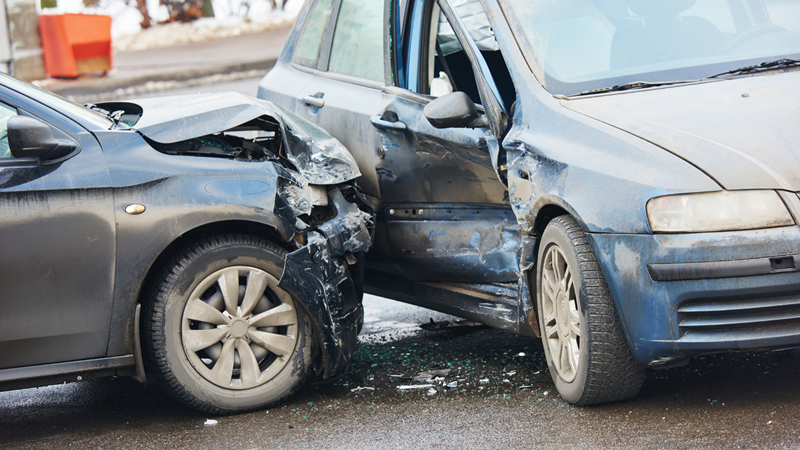
Evidence collected at the scene often determines fault later. Take wide and close-up photos of all vehicles involved, capturing overall scene context and specific damage details.
Photograph skid marks, debris, road damage, and surrounding traffic controls. Capture lighting conditions, weather, and visibility issues. Write down personal observations while events remain fresh in memory.
What to Photograph After a Crash
Vehicle damage from all angles, license plates and identifying marks, intersection layout and lane positions, traffic lights or stop signs, and any hazards such as potholes, ice, or construction zones.
Step 4: Exchange Information with Other Drivers
Connecticut law requires the exchange of names, addresses, phone numbers, insurance information, and vehicle registration details. Obtain insurance carrier names and policy numbers from all drivers.
Record driver’s license numbers and vehicle registration information. Never discuss fault or apologize, as these statements can be used against you. Remain polite and cooperative while limiting conversation to facts only.
Step 5: Obtain a Police Report
Police reports provide neutral third-party documentation of crash circumstances. Officers gather statements from all drivers and witnesses, documenting multiple perspectives.
Request a copy of the police report after the accident by contacting the responding police department. Most departments make reports available within 5-14 days. Review the report carefully for errors.
Step 6: Seek Prompt Medical Attention
Internal injuries and soft tissue damage often aren’t immediately noticeable. Early treatment provides stronger documentation that directly links medical conditions to the accident.
Experienced car accident lawyers emphasize that gaps between accidents and first medical treatment give insurance companies ammunition to deny claims. Follow all prescribed treatment plans consistently and keep copies of every medical bill and record.
Common car accident injuries include whiplash and cervical spine injuries, herniated discs and lower back trauma, traumatic brain injuries and concussions, fractures and joint injuries, and muscle, tendon, and ligament damage.
Step 7: Report the Accident to Your Insurance Company
Notify your insurer promptly, as most policies require reporting accidents within specific timeframes. Share basic facts about the accident, including date, time, location, and general description.
Never give recorded statements without legal guidance. Insurance companies attempt to minimize payouts by making early, lowball settlement offers and requesting extensive recorded statements. Maintain consistency in all reporting.
Step 8: Understand Connecticut’s Fault Rules and Deadlines
Connecticut operates under an at-fault insurance system, in which the driver who caused the accident bears financial responsibility. Connecticut follows a modified comparative negligence rule that reduces compensation in proportion to the victim’s percentage of fault.
Abogados de lesiones personales de Connecticut can explain that victims who are 51% or more at fault cannot recover any compensation. A victim 20% at fault for an accident with $100,000 in damages recovers only $80,000.
Connecticut’s statute of limitations for personal injury claims is dos años from the date of the accident. Missing this deadline permanently eliminates the right to pursue compensation.
Step 9: Preserve Evidence and Records
Organize all accident-related documents in a dedicated file. Save repair estimates and receipts that document vehicle damage costs.
Maintain files for medical and insurance paperwork. Document wage losses through pay stubs, tax returns, and employer letters. Back up digital evidence to prevent loss.
Step 10: Consult a Connecticut Car Accident Attorney
Legal guidance becomes critical when injuries are serious, fault is disputed, or settlement offers seem inadequate. Attorneys investigate fault and damages through accident reconstruction and expert consultations.
Contingency fee structures allow victims to hire experienced attorneys without upfront costs. Attorney representation protects long-term financial interests by ensuring settlements account for future medical needs and permanent disabilities. Exploring L.A. Law’s full range of injury practice areas shows how experienced representation helps with complex cases.
Discover Why Car Accident Injury Victims Across Connecticut Trust L.A. Law
Following the correct steps after an accident protects both immediate health needs and long-term legal rights. Simple mistakes permanently affect compensation by creating documentation gaps or missing critical deadlines.
L.A. Law’s experience with Connecticut car accident claims comes from handling hundreds of cases throughout Hartford, New Haven, Waterbury, and across the state. Our background dealing with insurance companies provides insight into the tactics insurers use to minimize payouts.
Victims should not face insurance companies alone when dealing with serious injuries or disputed fault. Contact L.A. Law today for a free consultation. Call 860-595-3163 now to speak directly with a Connecticut car accident attorney who will fight for your rights and maximize your recovery.



 ES
ES  EN
EN  PT
PT