
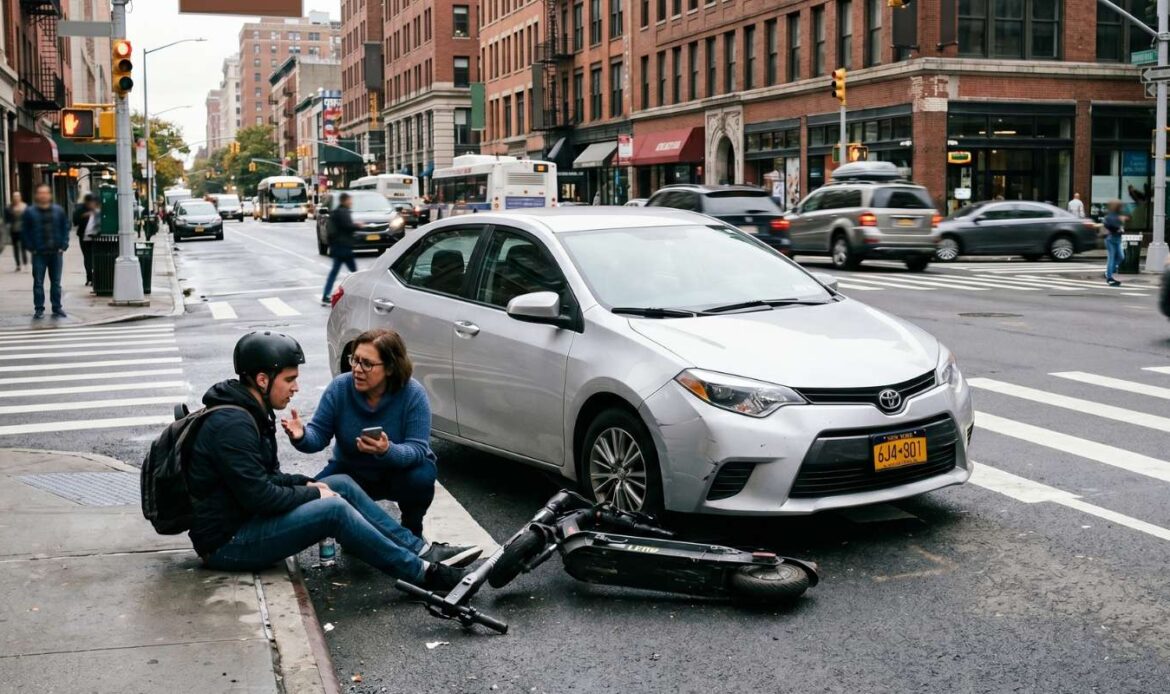
Os acidentes envolvendo patinetes elétricos e carros estão aumentando drasticamente em Connecticut e em todos os Estados Unidos, deixando os usuários feridos com lesões graves e questões urgentes e sem resposta sobre quem arcará com as despesas médicas, salários perdidos e recuperação. Ao contrário das colisões entre carros, onde a culpa costuma ser mais evidente, as colisões com patinetes elétricos envolvem uma combinação singular de leis de trânsito, regras de preferência e regulamentos de compartilhamento de vias que tornam a determinação da culpa significativamente mais complexa.
Este artigo explica como a responsabilidade é estabelecida em casos de acidentes com patinetes elétricos, o que os usuários lesionados precisam provar para receber indenização e por que trabalhar com um advogado experiente em acidentes com patinetes elétricos pode fazer toda a diferença no resultado do seu caso. Seja você vítima de uma porta aberta por um motorista estacionado, de uma ultrapassagem fechada no trânsito ou de uma colisão em um cruzamento, entender seus direitos legais é o primeiro passo para receber uma indenização. Na LA Law, nossa equipe está preparada para ajudar. Equipe de lesões pessoais de Connecticut Lida com esses casos complexos desde a investigação inicial até a resolução ou o julgamento.
Por que os acidentes envolvendo patinetes elétricos e carros são mais complicados do que você imagina
Em muitos estados, as trotinetes elétricas ocupam uma zona cinzenta legal, classificadas algures entre bicicletas e veículos motorizados, dependendo das leis locais e da definição do dispositivo na legislação estadual. Connecticut possui leis específicas que regem o uso de trotinetes elétricas em estradas, ciclovias e calçadas, e as violações dessas regras podem afetar diretamente a culpa em caso de acidente. Por exemplo, circular numa área proibida ou não respeitar os sinais de trânsito pode ser usado pela seguradora da outra parte para transferir a culpa para o utilizador ferido, mesmo quando o condutor foi claramente negligente. A cobertura de seguros para utilizadores de trotinetes elétricas é frequentemente limitada ou inexistente, obrigando os utilizadores feridos a recorrer ao seguro automóvel do condutor culpado, em vez do seu próprio seguro. A vulnerabilidade física dos utilizadores de trotinetes elétricas, em comparação com os ocupantes de automóveis, significa que as lesões são frequentemente graves, incluindo fraturas, traumatismo craniano e escoriações, aumentando os custos financeiros de cada reclamação por acidente com trotinete elétrica e tornando a questão da culpa muito mais relevante do que seria numa pequena colisão.
Como a lei de Connecticut define culpa em casos de lesão corporal
A Regra da Negligência Comparativa Modificada
Connecticut adota um padrão de negligência comparativa modificado, o que significa que um motociclista ferido só pode receber indenização se for considerado menos de 51% culpado pelo acidente. Se o motociclista for considerado 30% responsável, sua indenização é reduzida em 30%, tornando a atribuição precisa de culpa crucial para o valor da sua indenização. As seguradoras frequentemente tentam inflar a parcela de culpa do motociclista para reduzir ou negar os pagamentos, e é exatamente por isso que a representação legal é importante desde o início do processo. Os mesmos princípios de negligência comparativa se aplicam em todo o estado. casos de lesão corporal em Connecticut, desde acidentes de carro até lesões de pedestres.
O que significa negligência em uma reclamação por acidente com patinete elétrico
Negligência significa que uma das partes deixou de exercer o cuidado razoável, como um motorista que avançou o sinal vermelho ou não verificou os retrovisores antes de abrir a porta do carro para uma ciclovia. Para ter sucesso em uma ação judicial por acidente com patinete elétrico, o condutor ferido deve comprovar a negligência, a violação do dever, a causalidade e os danos, que são os quatro elementos essenciais de qualquer caso de negligência. As provas de negligência podem incluir imagens de câmeras de trânsito, depoimentos de testemunhas, boletins de ocorrência e análises periciais de reconstituição do acidente que reconstituem exatamente como a colisão ocorreu.
Causas comuns de colisões entre patinetes elétricos e carros
Entender como esses acidentes normalmente acontecem ajuda a esclarecer onde geralmente reside a culpa. Os padrões de colisão mais comuns envolvem motoristas que não levam em consideração a presença e a prioridade de passagem dos usuários de patinetes elétricos que compartilham a via.
- As colisões em cruzamentos estão entre as mais frequentes, muitas vezes causadas por motoristas que não dão preferência aos ciclistas que têm o direito de passagem em uma faixa de pedestres ou ciclovia sinalizada.
- Acidentes de "dooring" ocorrem quando um motorista estacionado abre a porta do carro bruscamente na trajetória de um condutor de patinete elétrico que se aproxima, o que a lei de Connecticut considera negligência do motorista.
- Mudanças de faixa inseguras e entradas em vias expressas sem sinalização frequentemente colocam os condutores de trotinetes elétricas em situações de risco de vida, com pouco tempo para reagir.
- A condução distraída, incluindo o envio de mensagens de texto ao volante, continua a ser uma das principais causas de acidentes envolvendo utentes vulneráveis das vias, como os condutores de trotinetes elétricas.
- A falta de atenção aos pontos cegos, especialmente em veículos maiores como SUVs e caminhões, frequentemente resulta em colisões laterais que lançam os motociclistas ao asfalto.
Quem pode ser responsabilizado após um acidente com patinete elétrico?
O motorista culpado
Na maioria dos casos de acidentes com patinetes elétricos, o condutor do veículo é o principal responsável quando viola uma lei de trânsito, dirige de forma imprudente ou não compartilha a via com segurança. Uma ação judicial bem-sucedida contra o condutor permite que o usuário ferido busque indenização por meio da apólice de seguro de responsabilidade civil por danos corporais do condutor. Se o condutor estava utilizando o veículo a trabalho no momento do acidente, seu empregador também pode ser responsabilizado de acordo com a doutrina jurídica de responsabilidade objetiva do empregador (respondeat superior), o que pode ser importante quando os limites da apólice pessoal do condutor não são suficientes para cobrir ferimentos graves. Esses casos têm muito em comum com reivindicações por acidentes de carro na forma como a responsabilidade do condutor é estabelecida.
A empresa ou fabricante de patinetes elétricos
Se um componente defeituoso da scooter, como freios com defeito ou um acelerador com mau funcionamento, contribuiu para o acidente, o fabricante ou a empresa de aluguel podem ser responsabilizados de acordo com a lei de responsabilidade do produto. Empresas de aluguel de scooters como a Lime ou a Bird também podem enfrentar processos se a scooter não recebeu a manutenção adequada ou se o aplicativo forneceu informações de segurança imprecisas aos usuários. Esses processos exigem uma estratégia jurídica diferente e geralmente envolvem especialistas em responsabilidade do produto que podem examinar o dispositivo e comprovar o defeito, o que é mais um motivo para consultar um advogado especializado em acidentes com scooters elétricas o mais rápido possível, antes que as provas se percam.
Entidades governamentais responsáveis pelas condições das estradas
Estradas mal conservadas, sinalização ausente ou ciclovias com projeto perigoso podem transferir parte da responsabilidade para o município ou órgão estadual de transportes. Um buraco que prende a roda de uma scooter, uma faixa de pedestres apagada que os motoristas ignoram ou uma ciclovia que termina abruptamente, forçando os ciclistas a entrar no trânsito, podem contribuir para um acidente e fundamentar uma ação judicial contra o órgão governamental responsável. Ações contra entidades governamentais em Connecticut exigem notificação prévia rigorosa e têm prazos mais curtos do que ações contra particulares, tornando essencial agir rapidamente para preservar seus direitos. Documentar as condições da via no local do acidente com fotos e vídeos imediatamente após a ocorrência pode preservar provas cruciais para esse tipo de ação, visto que os defeitos na via são frequentemente reparados antes que a investigação seja concluída, o que pode dificultar a comprovação da existência do problema no momento do acidente.
O que os usuários lesionados de patinetes elétricos precisam comprovar para ganhar uma ação judicial por acidente com patinete elétrico.
Para obter sucesso em um processo por acidente com patinete elétrico, é necessário comprovar os quatro elementos de negligência com evidências sólidas e bem organizadas que conectem a conduta do condutor aos seus ferimentos. Uma documentação robusta, incluindo o boletim de ocorrência, registros do pronto-socorro, fotos e informações de contato de testemunhas, é a base de qualquer processo bem-sucedido, e a qualidade dessa documentação muitas vezes determina se a seguradora levará seu caso a sério ou o tratará como uma oportunidade para oferecer uma indenização muito baixa.
Os quatro elementos que todo ciclista lesionado deve estabelecer:
- Obrigação: Todos os condutores têm o dever de zelar pela segurança na partilha da estrada com os utilizadores de trotinetes elétricas, o que torna este elemento fácil de estabelecer na maioria dos casos.
- Violação: demonstrando exatamente como o motorista se desviou dessa obrigação, como por exemplo, excesso de velocidade, desrespeito a um sinal de pare ou direção sob efeito de álcool ou drogas.
- Causalidade: A relação direta entre o ato negligente do motorista e os ferimentos do passageiro pode exigir o depoimento de um perito médico em casos de lesões graves.
- Danos: Documentar de forma completa e minuciosa as despesas médicas, a perda de salários, os custos de tratamentos futuros, a dor e o sofrimento, e a perda da qualidade de vida.
Medidas a serem tomadas imediatamente após um acidente com patinete elétrico.
Ligue para o 911 e procure atendimento médico.
Reporte o acidente às autoridades policiais e solicite assistência médica imediatamente. Procure avaliação médica mesmo que seus ferimentos pareçam leves, pois concussões, lesões em tecidos moles e hemorragias internas podem não apresentar sintomas de imediato, mas podem se agravar se não forem tratadas. Solicite uma cópia do boletim de ocorrência para seus registros e para futuras solicitações de indenização por acidentes com patinetes elétricos.
Documente a cena e reúna informações.
Fotografe o local do acidente de vários ângulos, incluindo a scooter, o veículo, as condições da estrada, os semáforos, as marcas de frenagem e os ferimentos visíveis. Registre os fatores ambientais que podem ter contribuído para a colisão, como iluminação precária, buracos ou sinalização obstruída, e preserve quaisquer roupas, capacetes ou pertences pessoais danificados como possíveis evidências. Anote o nome do condutor, a placa do veículo, os dados do seguro e as informações de contato, e converse com as testemunhas para obter seus nomes e números de telefone antes que elas deixem o local. Evite discutir a culpa ou fazer afirmações especulativas sobre como o acidente aconteceu.
Tenha cuidado com o seguro e entre em contato com um advogado.
Não forneça depoimentos gravados à seguradora do motorista sem orientação jurídica e evite aceitar ofertas de acordo antecipadas antes de compreender a extensão total de seus ferimentos e danos. Guarde cópias de todas as despesas médicas, registros e correspondências relacionadas ao acidente. Mais importante ainda, consulte um advogado especializado em acidentes com patinetes elétricos o mais breve possível para proteger seus direitos. A representação legal desde o início pode ajudar a preservar provas, identificar todos os responsáveis e evitar erros dispendiosos durante o processo de indenização, enquanto você se concentra em sua recuperação. Entre em contato com nossa equipe de atendimento a lesões em Connecticut. para começar.
Como a legislação de Los Angeles ajuda usuários de patinetes elétricos feridos a obterem indenização integral.
Determinar a culpa em um acidente envolvendo um patinete elétrico e um carro raramente é simples, mas compreender as leis de negligência de Connecticut, saber quem pode ser responsabilizado e agir rapidamente oferece aos usuários feridos uma chance real de obter uma indenização justa. Cada prova importa, cada prazo conta e cada declaração feita à seguradora pode afetar o resultado de uma ação judicial por acidente de patinete elétrico. Usuários feridos não deveriam ter que lidar com seguradoras, complexidades legais e recuperação física ao mesmo tempo, sem o apoio de um advogado qualificado, principalmente quando a seguradora do motorista culpado trabalha desde o início para limitar o valor da indenização.
A LA Law é uma firma de advocacia experiente em Connecticut, especializada em casos de lesões corporais envolvendo acidentes com patinetes elétricos, desde a investigação inicial até a negociação de acordos ou julgamento. Nós cuidamos de toda a comunicação com as seguradoras, protegendo nossos clientes das táticas utilizadas para minimizar ou negar seus pedidos de indenização por acidentes com patinetes elétricos. Entre em contato hoje mesmo com os advogados de confiança especializados em lesões corporais da LA Law. Para uma avaliação gratuita do seu caso, deixe um advogado experiente em acidentes com patinetes elétricos lutar pela indenização completa que você merece. Ligue para 860-595-3163. Você só paga se ganharmos o caso.

 PT
PT  EN
EN  ES
ES